
how-to
Crawl Space Vapor Barriers in Charlotte, NC: Thickness, Installation & Moisture Control
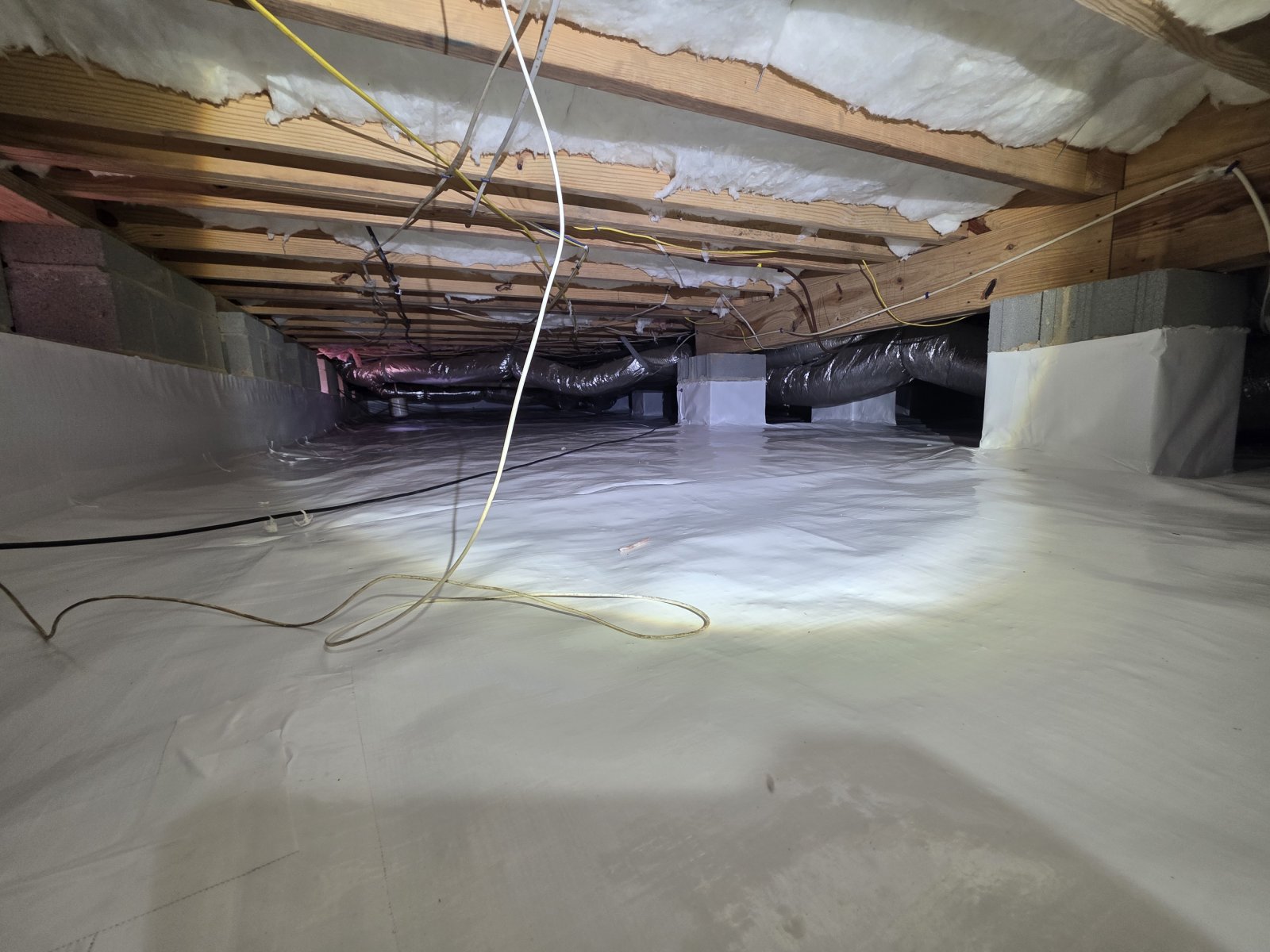
Crawl Space Vapor Barriers in Charlotte, NC: Thickness, Installation & Moisture Control
A homeowner's guide to choosing the right vapor barrier, understanding crawl space moisture, and knowing when encapsulation makes sense.
Crawl spaces are easy to overlook—until you notice musty odors, damp insulation, or moisture collecting beneath your home.
In Charlotte, Matthews, Indian Trail, Waxhaw, and surrounding North Carolina communities, crawl space moisture is a common concern. Humid summers, rainfall, exposed soil, and drainage conditions can all contribute to moisture problems.
A properly installed crawl space vapor barrier can help reduce moisture evaporating from the ground. But not every crawl space needs the same solution.
At ETA Home Solutions LLC, we help homeowners understand the differences between basic vapor barriers, upgraded moisture barriers, and full crawl space encapsulation.
Table of Contents
- What Is a Crawl Space Vapor Barrier?
- Why Crawl Space Moisture Is Common in North Carolina
- Signs Your Crawl Space May Need a Vapor Barrier
- Choosing the Right Thickness: 6, 10, 12, 16, or 20 Mil
- How Professional Vapor Barrier Installation Works
- Basic Vapor Barrier vs. Full Crawl Space Encapsulation
- Is Moisture Under a Vapor Barrier Normal?
- When Do You Need Drainage or a Dehumidifier?
- How Much Does Vapor Barrier Installation Cost in Charlotte?
- Maintaining Your Crawl Space Vapor Barrier
- Why Choose ETA Home Solutions?
- Frequently Asked Questions
- Get a Free Crawl Space Estimate
1. What Is a Crawl Space Vapor Barrier?
A crawl space vapor barrier is a moisture-resistant membrane installed over exposed soil beneath a home.
Its primary purpose is to reduce the amount of water vapor entering the crawl space from the ground.
Even when soil appears dry, moisture can evaporate from beneath the surface and contribute to elevated humidity.
A vapor barrier helps separate the exposed soil from the crawl space air.
Depending on the installation, it may be part of a basic ground-cover system or a more comprehensive crawl space encapsulation.
A vapor barrier does not automatically solve flooding, plumbing leaks, foundation seepage, or every humidity problem. Those conditions may require additional solutions.
2. Why Crawl Space Moisture Is Common in North Carolina
The Charlotte region experiences warm, humid weather and periods of significant rainfall.
Several conditions can contribute to moisture beneath homes:
- Exposed soil: Ground moisture evaporates into the crawl space.
- Outdoor humidity: Humid air can enter through foundation vents and other openings.
- Poor drainage: Rainwater may collect near the foundation or enter the crawl space.
- Improper grading: Soil sloping toward the house can direct water toward the foundation.
- Plumbing leaks: Leaking pipes can introduce moisture unrelated to outdoor weather.
- Condensation: Humid air contacting cooler surfaces can produce moisture on ductwork, pipes, or framing.
Identifying the moisture source matters because a vapor barrier addresses ground vapor, not every form of water intrusion.
3. Signs Your Crawl Space May Need a Vapor Barrier
Common warning signs include:
- Exposed dirt throughout the crawl space
- Torn, missing, or deteriorated plastic sheeting
- Persistent musty odors
- Damp or falling floor insulation
- Condensation on ductwork or other surfaces
- Elevated crawl space humidity
- Visible moisture on framing or foundation surfaces
These symptoms do not all have the same cause.
For example, damp insulation could be related to humid air, a plumbing leak, or another moisture source. A musty smell may indicate conditions that deserve further investigation.
The best approach is to inspect the crawl space before choosing a solution.
4. Choosing the Right Thickness: 6, 10, 12, 16, or 20 Mil
Vapor barrier thickness is measured in mils. One mil equals one-thousandth of an inch.
Different materials offer different levels of durability.
Thickness | Typical Characteristics | Common Considerations |
|---|---|---|
6 mil | Lightweight, lower-cost polyethylene | Can be more vulnerable to punctures and tears |
10 mil | Heavier than standard 6-mil material | May suit upgraded ground-cover applications |
12 mil | Available in reinforced products | Often selected when greater durability is desired |
16 mil | Heavy-duty options available | Useful where durability and installation conditions justify it |
20 mil | Heavy-duty membrane options | Often considered for more demanding encapsulation applications |
Thicker does not automatically mean better in every situation.
Reinforcement, puncture resistance, vapor permeance, installation quality, and the crawl space's physical conditions all matter.
A reinforced 12-mil product, for example, may perform differently from an unreinforced membrane of similar thickness.
At ETA Home Solutions, we evaluate the crawl space and discuss appropriate material options rather than assuming every homeowner needs the thickest available liner.
5. How Professional Vapor Barrier Installation Works
Although every crawl space is different, professional installation generally involves several important steps.
Step 1: Inspect the Crawl Space
Before installation, inspect for standing water, leaks, drainage problems, damaged insulation, debris, and other conditions that may affect the work.
Active water intrusion should be addressed appropriately rather than simply covered with plastic.
Step 2: Prepare the Ground
Remove debris, sharp objects, and materials that could damage the new barrier.
Some uneven soil is normal. Minor dips and slopes do not necessarily require extensive grading.
However, deep depressions, sharp rocks, or areas that collect water may need additional attention.
Step 3: Install the Vapor Barrier
The membrane is laid across the crawl space floor to provide appropriate soil coverage.
Adjacent sections are overlapped according to the selected material, installation method, and applicable requirements.
Seams may be taped or otherwise sealed depending on the system being installed.
Step 4: Address Piers and Penetrations
Support piers, plumbing penetrations, and other obstacles require careful fitting to minimize exposed soil and avoid unnecessary gaps.
More comprehensive systems may include sealed pier wraps and additional detailing.
Step 5: Finish According to the Selected System
This is where the distinction between a basic vapor barrier and full encapsulation becomes important.
A basic ground vapor barrier primarily covers the soil. It does not necessarily require the same foundation-wall attachment, vent sealing, and air-sealing details as a full encapsulation system.
A full encapsulation involves a more comprehensive approach to sealing the crawl space and controlling moisture.
The installation should match the agreed scope and applicable building requirements.
Learn more about our crawl space vapor barrier installation services.
6. Basic Vapor Barrier vs. Full Crawl Space Encapsulation
Homeowners often use these terms interchangeably, but they describe different levels of work.
Basic Crawl Space Vapor Barrier
A basic vapor barrier focuses on reducing ground moisture evaporation.
It generally involves covering the exposed soil with a suitable membrane.
Advantages:
- Lower initial cost than full encapsulation
- Reduces moisture vapor entering from exposed soil
- Can replace damaged or missing ground plastic
- May be appropriate when other crawl space conditions are satisfactory
However, a basic vapor barrier does not eliminate outdoor humidity entering through open vents.
Full Crawl Space Encapsulation
Full encapsulation is a more comprehensive moisture-control approach.
Depending on the home's design and applicable requirements, the work can include:
- Heavy-duty ground vapor barrier
- Sealed seams and penetrations
- Foundation-wall liner
- Sealing foundation vents and other openings
- Crawl space air sealing
- Insulation improvements
- Humidity control using an appropriately designed system, often including a dehumidifier
Drainage repairs may also be needed where water intrusion exists.
Which option is better?
It depends on the crawl space.
A homeowner with exposed soil but otherwise manageable conditions may benefit from a basic vapor barrier.
A homeowner dealing with persistent humidity, condensation, or other moisture concerns may need a more comprehensive approach.
Explore our full crawl space encapsulation services.
7. Is Moisture Under a Vapor Barrier Normal?
This is one of the most common questions homeowners ask.
Yes, damp soil or moisture beneath a vapor barrier can be normal.
The purpose of the membrane is to reduce the movement of water vapor from the soil into the crawl space air.
That means the ground beneath the barrier may remain damp.
In some situations, moisture can be visible on the underside of the plastic.
However, there is an important difference between damp soil and a drainage problem.
Conditions That May Be Expected
- Damp soil beneath the liner
- Some moisture trapped below the plastic
- A dry upper surface with no signs of active water intrusion
Conditions That Deserve Investigation
- Significant standing water beneath or above the barrier
- Water entering through foundation walls
- Plastic lifting or floating due to accumulated water
- Persistent elevated humidity above the liner
- Wet framing or insulation
- Water appearing after heavy rainfall
A vapor barrier is not a substitute for proper drainage.
If water is collecting beneath the home, the source should be identified before recommending repairs.
8. When Do You Need Drainage or a Dehumidifier?
Not every damp crawl space needs a French drain, sump pump, or dehumidifier.
These systems address different problems.
Crawl Space Drainage
Drainage improvements may be appropriate when liquid water enters or accumulates beneath the home.
Depending on the conditions, solutions could include exterior grading corrections, drainage improvements, an interior drainage system, or a sump pump.
The right solution depends on where the water originates and how it moves.
Crawl Space Dehumidifier
A crawl space dehumidifier helps remove moisture from the air.
It may be useful when humidity remains elevated even after ground moisture and other contributing conditions have been addressed.
A dehumidifier does not stop groundwater intrusion or repair leaks.
ETA Home Solutions offers crawl space dehumidifier installation, including standalone installations where appropriate.
The key is choosing the solution that addresses the actual problem—not automatically installing every available system.
9. How Much Does Vapor Barrier Installation Cost in Charlotte?
Crawl space vapor barrier installation costs vary based on the property and scope of work.
Important pricing factors include:
- Crawl space square footage
- Selected vapor barrier material
- Crawl space height and accessibility
- Debris and old material removal
- Number of support piers and obstacles
- Ground preparation
- Seam sealing and attachment requirements
- Existing water or drainage problems
- Whether insulation, dehumidification, or other services are included
A straightforward ground-cover installation generally costs less than a full encapsulation involving foundation-wall liners, sealing, insulation adjustments, and humidity control.
Two homes with the same square footage may require very different amounts of labor.
For that reason, an on-site evaluation is the best way to provide an accurate project estimate.
ETA Home Solutions offers free estimates for homeowners in Charlotte and surrounding communities.
10. Maintaining Your Crawl Space Vapor Barrier
A properly installed vapor barrier should be checked periodically.
Homeowners can look for:
- Tears or punctures
- Seams that have separated
- Exposed soil
- Water collecting above the barrier
- Damage caused by plumbing or other contractor work
- New condensation or moisture problems
An annual inspection is a useful starting point, along with checking after major plumbing work or known water intrusion.
Small damaged areas may be repairable using materials compatible with the existing membrane.
Persistent water intrusion, significant damage, or ongoing humidity problems deserve further evaluation.
11. Why Choose ETA Home Solutions?
At ETA Home Solutions LLC, we focus on practical crawl space solutions based on the conditions beneath each home.
Our crawl space services include:
- Basic vapor barrier installation and replacement
- Mid-level and full crawl space encapsulation
- Crawl space insulation removal and installation
- Crawl space air sealing
- Dehumidifier installation
- Crawl space drainage solutions
- Sump pump installation
- Crawl space access door replacement
We believe homeowners should understand what work is being recommended and why.
A basic vapor barrier may be sufficient for one property, while another may require drainage improvements or a more complete moisture-control system.
Our goal is to recommend a scope of work that fits the home's needs.
Built on Faith. Focused on Quality.
12. Frequently Asked Questions
What is the best vapor barrier thickness for a crawl space?
There is no single thickness that's best for every crawl space. A suitable product depends on local requirements, the condition of the ground, expected foot traffic, material durability, and the type of installation. Reinforced 12-mil and other heavy-duty membranes can offer durability advantages over thin builder-grade plastic.
Is a 6-mil vapor barrier enough?
Six-mil polyethylene is used in some basic ground-cover applications, but it can be easier to damage than heavier or reinforced materials. The appropriate minimum depends on the project and applicable requirements.
Does a vapor barrier prevent mold?
A vapor barrier helps reduce ground moisture evaporation, which can contribute to better moisture control. It does not guarantee that mold will never develop. Leaks, humid air, condensation, and other moisture sources must also be considered.
Do I need to level my entire crawl space before installing a vapor barrier?
Not necessarily. Minor hills and depressions are common and do not automatically reduce the effectiveness of a properly installed barrier. Sharp objects, significant holes, and areas where water collects may need attention.
Why is the ground wet underneath my vapor barrier?
Soil naturally contains moisture, and the barrier restricts evaporation into the crawl space. Dampness beneath the liner can be expected. Significant pooling or signs of water intrusion should be investigated.
Is encapsulation better than a regular vapor barrier?
Full encapsulation provides a more comprehensive approach to controlling moisture and humid air, but not every home requires it. The right choice depends on the crawl space's existing conditions and the homeowner's goals.
Can I install a crawl space dehumidifier without full encapsulation?
Yes, a standalone dehumidifier can be installed in some crawl spaces, but its effectiveness depends on the environment. In a highly vented or unsealed crawl space, outdoor air exchange can make humidity control more difficult. An evaluation helps determine whether other improvements are needed.
How long does a crawl space vapor barrier last?
Lifespan depends on the material, installation, foot traffic, environmental conditions, and whether the liner is damaged by pests, plumbing work, or other activity. Regular inspections help identify problems before they become extensive.
Do you serve areas outside Charlotte?
Yes. ETA Home Solutions serves Charlotte and surrounding communities, including Matthews, Indian Trail, Waxhaw, Monroe, Mint Hill, Weddington, and nearby areas.
13. Get a Free Crawl Space Estimate
Whether you need a basic vapor barrier replacement, upgraded crawl space moisture protection, or full encapsulation, ETA Home Solutions can help you evaluate your options.
We serve homeowners throughout the Charlotte, North Carolina area.
ETA Home Solutions LLC
Phone: (704) 776-8733
Email: etahomesnc@gmail.com
Website: etahomesolutions.com
BUILT ON FAITH. FOCUSED ON QUALITY.
Last Updated: October 19, 2026
Frequently Asked Questions
What is the best moisture barrier for a crawl space?
For most homes, a reinforced polyethylene film rated 10 mil or thicker is the best crawl space moisture barrier. It resists tears from foot traffic and debris better than 4 or 6 mil plastic sheeting, which punctures easily. In crawl spaces with standing water or heavy soil moisture, 12 to 20 mil heavy-duty membranes hold up longer. Whatever thickness you choose, the material should be moisture-resistant, cover the entire crawl space floor, and run up the foundation walls a few inches so water vapor cannot slip around the edges.
How thick should a crawl space vapor barrier be?
Crawl space vapor barrier thickness is measured in mils, and 6 mil is the practical minimum for a basic vapor retarder. Most professionals install 10 mil or 12 mil reinforced film because it survives installation and later inspections without tearing. Go with 20 mil in high-traffic crawl spaces or where water seepage is common. Thinner 4 mil plastic is really only suited to temporary use. Thicker film costs more upfront but usually outlasts cheap sheeting, which saves money on replacement and repairs.
Is it normal to have moisture under a crawl space vapor barrier?
A little condensation under the plastic is normal, especially in humid months, because soil moisture is trapped beneath the barrier rather than rising into the crawl space. What is not normal is standing water, water seeping over the edges, or the film floating. Those point to drainage problems, poor grading, or seams that were not taped and sealed. If you see puddles, address the water source first. A sump pump, French drain, or regrading may be needed before the barrier can do its job.
Is a crawl space vapor barrier worth it?
A crawl space moisture barrier is one of the highest-value moisture control upgrades a homeowner can make. It blocks water vapor from the soil, which lowers humidity, discourages mold growth and mildew, protects wood framing from rot, and reduces condensation on ducts and joists. Homes often feel less musty and stay more comfortable. Because pricing depends on square footage, existing damage, and whether drainage work is needed, a free in-home estimate can be provided to determine the specific cost.